Activities - Bosniak Studies

Activities

Upcoming events and workshops related to Bosniak communities worldwide

Featured Events & Workshops

Bosniak Studies organizes and participates in various academic events, workshops, and initiatives that explore the heritage, history, and contemporary issues affecting Bosniak communities.

The forensic investigation in the verdict of Genocide in Bosnia - Robert McNeil

The Bosniak Studies Monthly Session

June 28 2026

Artificial Intelligence is often portrayed as either humanity’s greatest breakthrough or its greatest threat. But what if both views miss something important?

In this presentation, Robert McNeil reflects on his work as part of the international forensic teams that investigated the mass graves following the Srebrenica genocide. McNeil begins by providing historical context, explaining how the UN-designated "safe areas" in Bosnia ultimately failed to protect Bosniak civilians. He argues that the term "safe area" was deliberately ambiguous, allowing the international community to avoid assuming full responsibility for protecting those trapped inside. He describes joining Physicians for Human Rights in 1995 before being recruited by the International Criminal Tribunal for the former Yugoslavia ICTY to help investigate newly discovered mass graves around Srebrenica. McNeil details the painstaking forensic process of recovering bodies, documenting evidence, conducting radiographic examinations, and assisting pathologists and anthropologists in identifying victims and establishing causes of death. The presentation highlights the extremely difficult conditions under which the investigations were carried out. The forensic teams worked in bomb-damaged temporary mortuaries with limited electricity, no running water, little protective equipment, and ongoing security threats. McNeil also recalls the emotional impact of seeing families desperately searching for the remains of missing loved ones while investigators were prohibited from speaking with them. A central theme of the talk is the importance of meticulous forensic work. McNeil explains that investigators refused to rush examinations because every piece of evidence would later be challenged in court. Detailed X-rays, autopsy reports, and forensic anthropology were essential, particularly after investigators discovered secondary mass graves where perpetrators had deliberately moved and fragmented victims' remains in an attempt to conceal the crimes. McNeil also discusses the legal significance of the forensic evidence gathered by the international teams. He explains why the ICTY established genocide in Srebrenica but not in Prijedor, despite the scale of atrocities committed there. While acknowledging the disappointment felt by survivors and victims' families, he notes that Radovan Karadžić was nevertheless convicted of numerous crimes against humanity and war crimes before receiving a life sentence, alongside Ratko Mladić. McNeil concludes by emphasizing that experts from 32 countries participated in the forensic investigations between 1996 and 2009. He argues that the scientific evidence collected during these investigations provides an irrefutable record of the crimes committed and remains one of the strongest responses to genocide denial. The presentation is both a personal account of forensic investigation and a reminder of the crucial role that scientific evidence played in delivering justice for the victims of the Bosnian genocide.
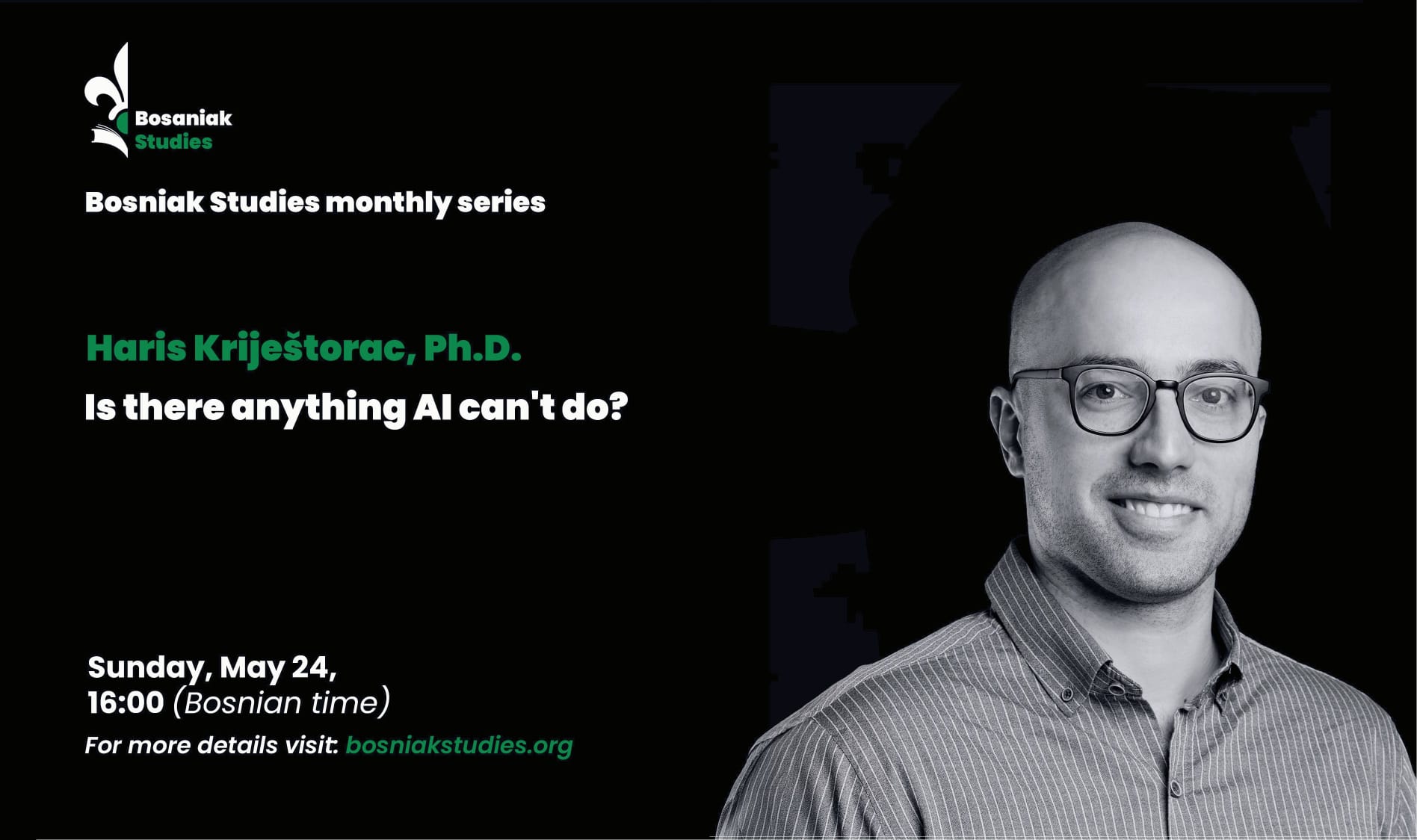
Haris Kriještorac Ph.D. - Is There Anything AI Can't Do? | The Hidden Limits of Artificial Intelligence

The Bosniak Studies Monthly Session

Sunday May 24 2026

Artificial Intelligence is often portrayed as either humanity’s greatest breakthrough or its greatest threat. But what if both views miss something important?

In this thought-provoking talk, researcher and educator Dr. Haris Kriještorac explores the question:

"Is there anything AI can't do?" Rather than focusing on technical capabilities alone, he examines the philosophical, cultural, and ideological assumptions that shape how we perceive AI.

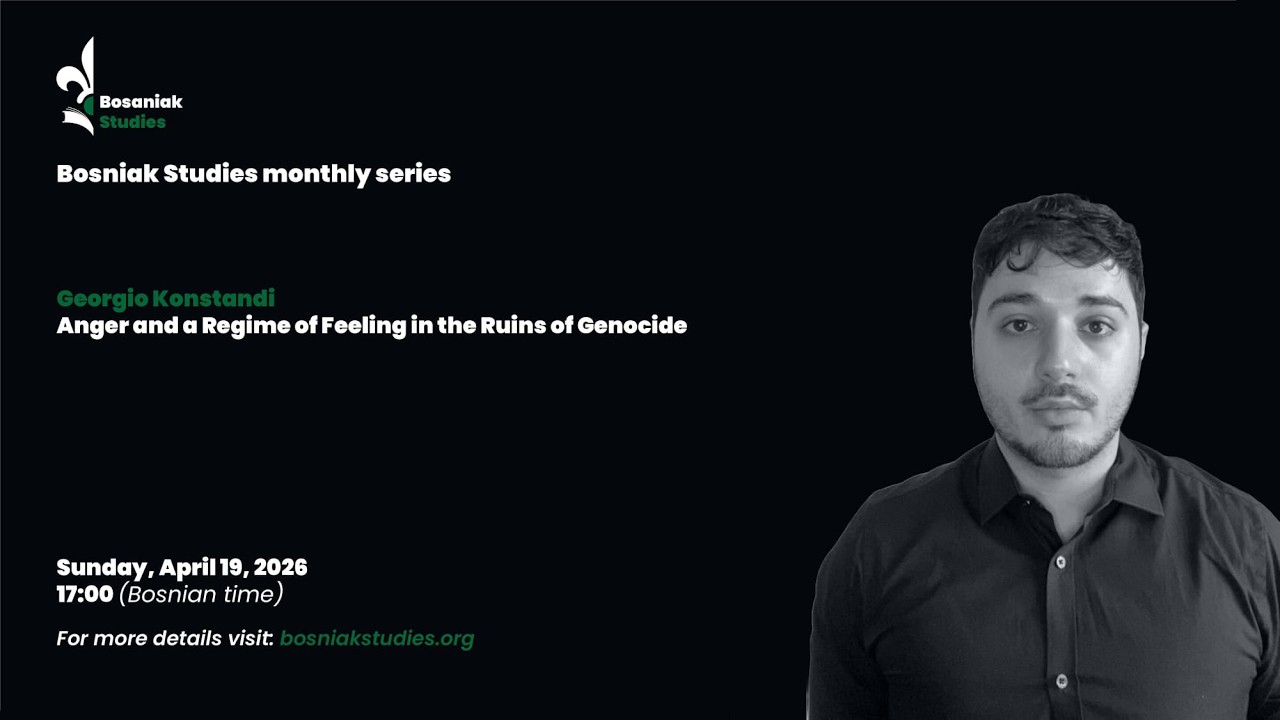
Georgio Konstandi - Anger and Regime of Feeling in the Ruins of Genocide

The Bosniak Studies monthly series highlights Georgio Konstandi's research on the emotional dimensions of Bosniak life in the post-genocide period.

Call for Papers - Handbook of Bosniak Studies

Call for Papers: Handbook of Bosniak Studies

Deadline: Friday, May 1, 2026

The Bosniak Studies Association invites chapter proposals for the first ever Handbook of Bosniak Studies, a comprehensive academic volume under the theme "Bosniaks: Past, Present, and Future of a Southeastern European Nation."

This landmark publication aims to bring together scholars and researchers from a wide range of disciplines to introduce the Bosniak nation across time and space — from ancient history to contemporary diaspora communities worldwide.

Key Information:

  • Abstract deadline: May 1, 2026
  • Abstracts: 300–500 words, submitted as a Word document
  • Include: CV and institutional affiliation of all contributors
  • Submit to: Mkrijest@fiu.edu
  • Editors: Mirsad Kriještorac, Ph.D. & Sabina Pačariz, Ph.D.

Contributions are welcome across all related fields, including Bosniak history, geography of the Bosniak world, and Bosniak culture and identity.

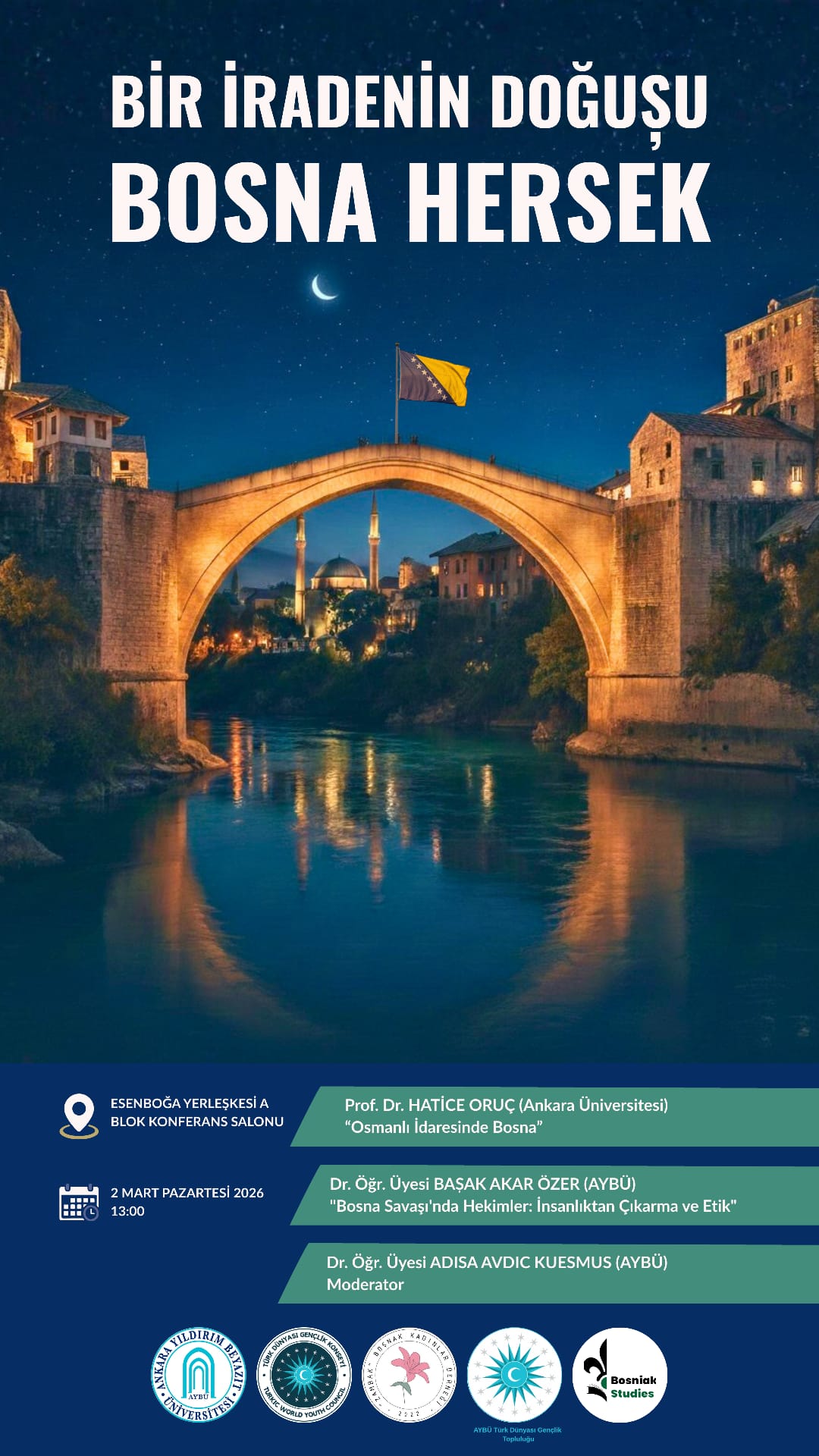
Roundtable - Independence Day of Bosnia and Herzegovina, Ankara

Roundtable: Independence Day of Bosnia and Herzegovina

Monday, March 2, 2026

At the initiative of the student organization Türk Dünyası Gençlik Topluluğu, Ankara Yıldırım Beyazıt University will host a roundtable discussion marking the 1st of March, Independence Day of Bosnia and Herzegovina, organized in cooperation with Bosniak Studies.

The event will examine the historical trajectory that led to Bosnia and Herzegovina's independence, situating it within the broader regional and international context of the early 1990s. In addition to its historical focus, the roundtable will introduce students in Ankara to key aspects of Bosniak history, cultural heritage, and intellectual traditions, contributing to academic dialogue and strengthening ties between our communities.

Event Details:

  • Date: Monday, March 2, 2026
  • Host: Ankara Yıldırım Beyazıt University
  • Organizers: Türk Dünyası Gençlik Topluluğu & Bosniak Studies
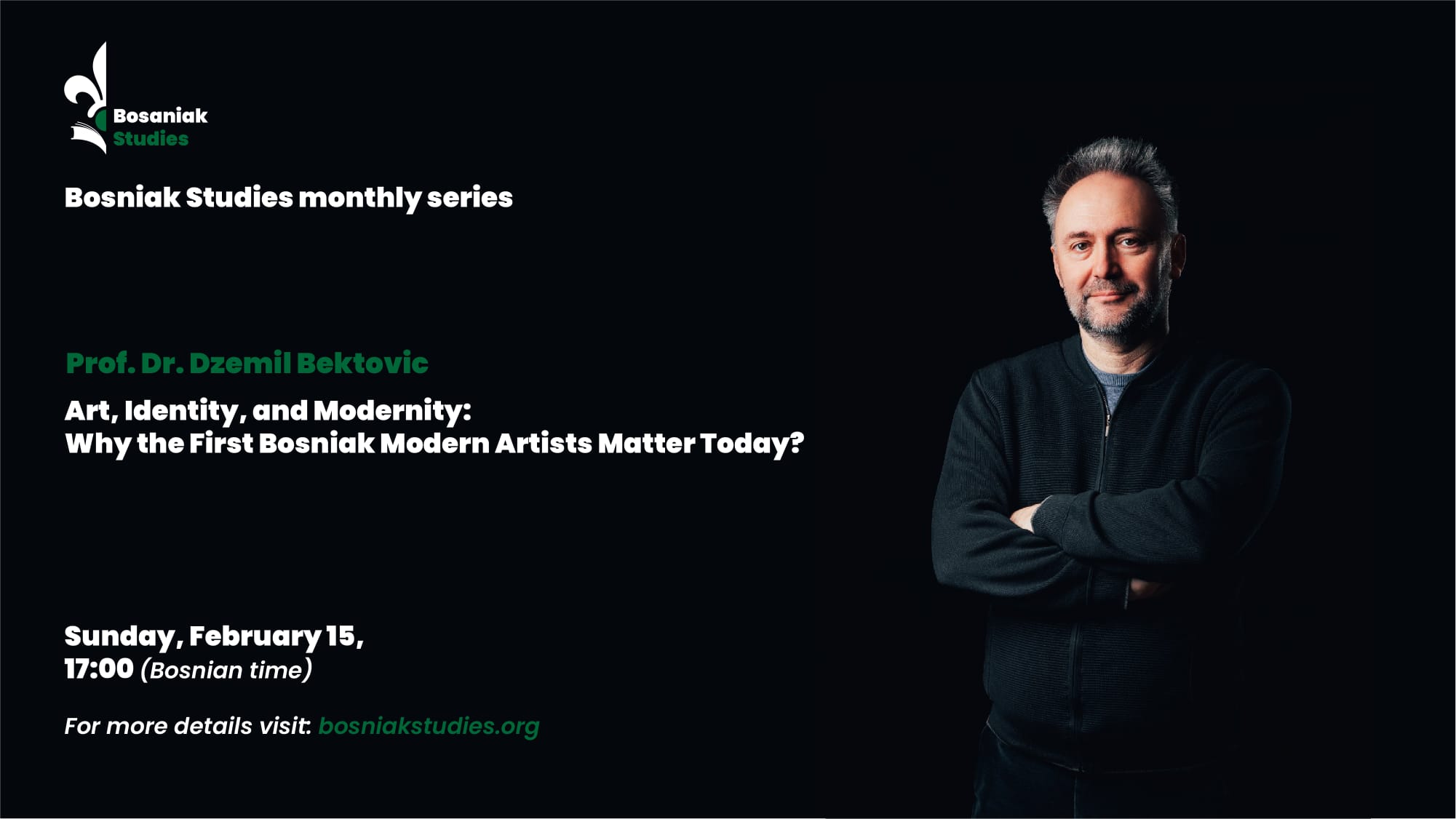
Monthly Meeting - Bosniak Modern Artists

Monthly Meeting: Art, Identity, and Modernity

Sunday, February 15, 2026 at 17:00 (Bosnian Time)

Join us for our next monthly meeting featuring a special 25-minute presentation by Dr. Dzemil Bektovic on "Art, Identity, and Modernity: Why the First Bosniak Modern Artists Matter Today."

Dr. Dzemil is currently working on his book on this subject and is graciously giving us the first preview of it with his presentation.

Presentation Overview:

This presentation explains the visual expressions of Bosniak modern art as a site of epistemic negotiation between dominant narratives of modernism and hidden cultural identities. Rather than approaching Bosniak modern art as a peripheral reflection of Western modernist paradigms, the study conceptualizes it as a dynamic field of visual agency in which modernity is reconfigured through cultural memory, historical background, and aesthetic resistance.

Key Topics:

  • Painting and related visual practices
  • Synthesis of local cultural heritage and international modernist influences
  • Strategies of abstraction, figuration, and hybridity
  • Challenging center–periphery models of art history
  • Revising the modernist canon through plural, context-sensitive historiographies

About the Speaker:

Dr. Dzemil Bektovic is a Professor of History, Philosophy and Theory of Art at International Balkan University in Skopje.

Event Details:

  • Date: Sunday, February 15, 2026
  • Time: 17:00 Bosnian Time
  • Format: Zoom Meeting (invitation with link will be sent to your email address on file)
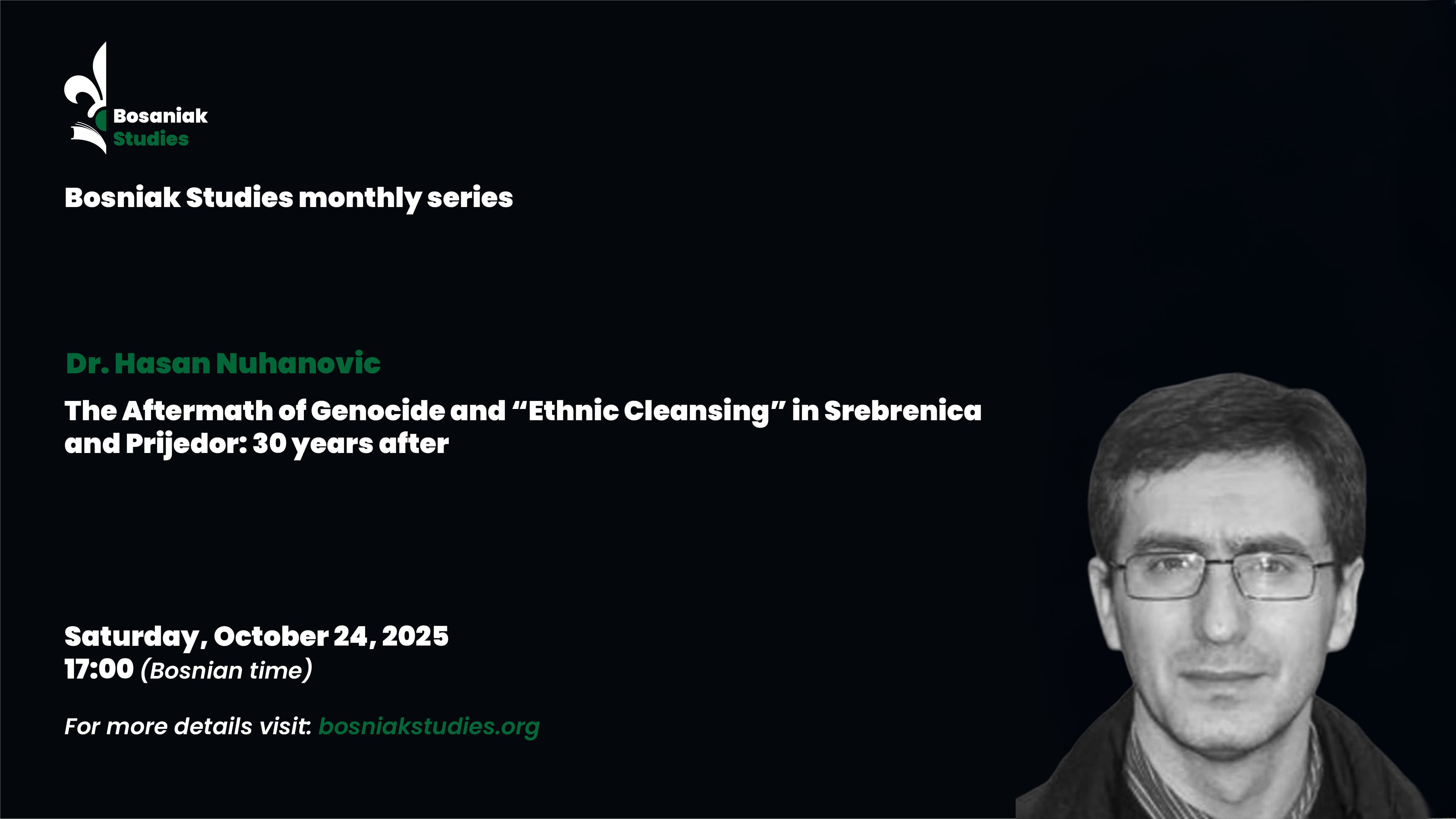
Dr. Hasan Nuhanovic - The Aftermath of Genocide and Ethnic Cleansing in Srebrenica and Prijedor

Monthly Meeting: The Aftermath of Genocide and "Ethnic Cleansing" in Srebrenica and Prijedor: 30 Years After

Saturday, October 24, 2025

Join us for a presentation by Dr. Hasan Nuhanovic on "The Aftermath of Genocide and 'Ethnic Cleansing' in Srebrenica and Prijedor: 30 Years After."

Event Details:

  • Date: Saturday, October 24, 2025
  • Speaker: Dr. Hasan Nuhanovic
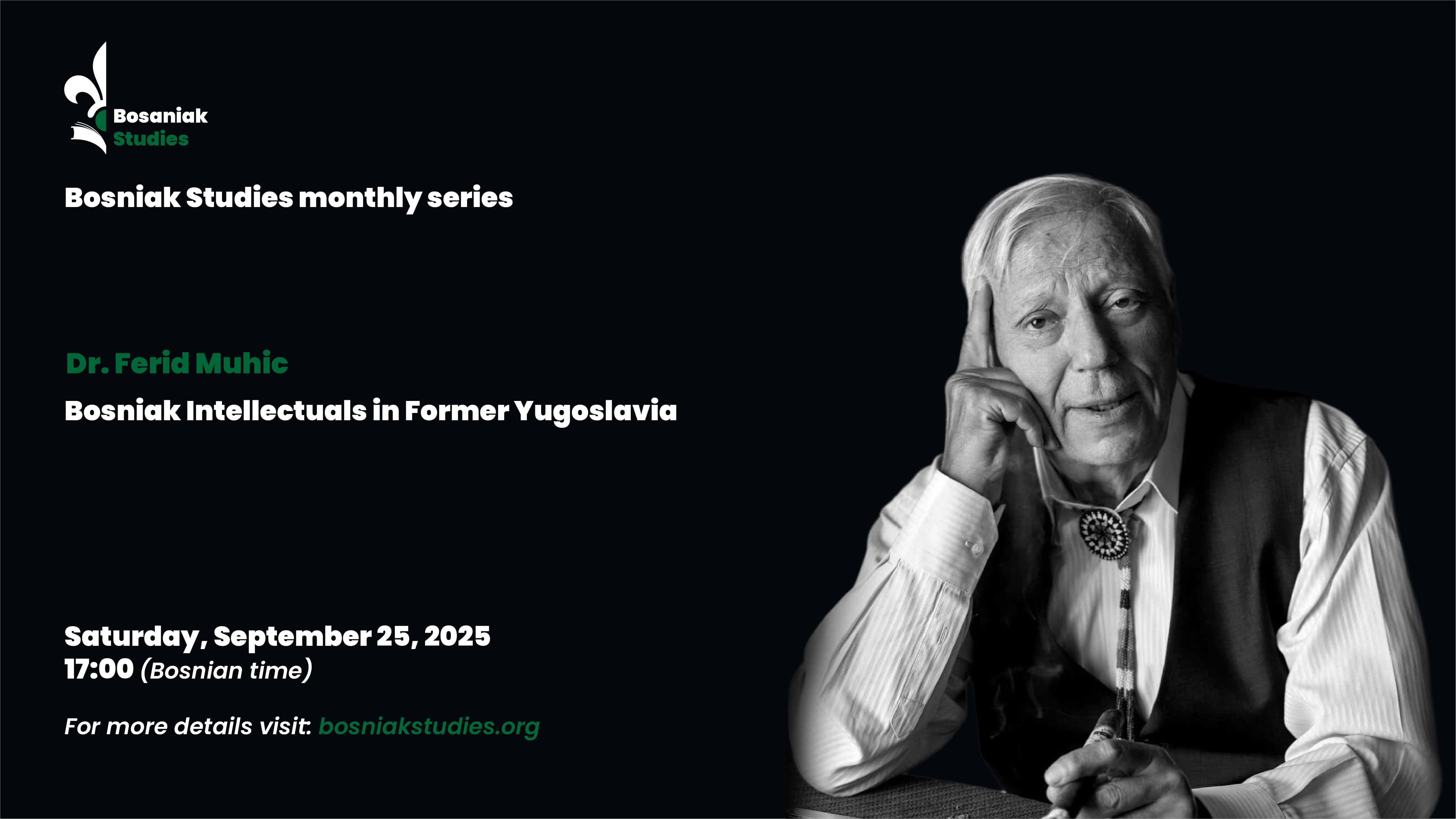
Dr. Ferid Muhic - Bosniak Intellectuals in Former Yugoslavia

Monthly Meeting: Bosniak Intellectuals in Former Yugoslavia

Saturday, September 25, 2025

Join us for a presentation by Dr. Ferid Muhic on "Bosniak Intellectuals in Former Yugoslavia."

Event Details:

  • Date: Saturday, September 25, 2025
  • Speaker: Dr. Ferid Muhic
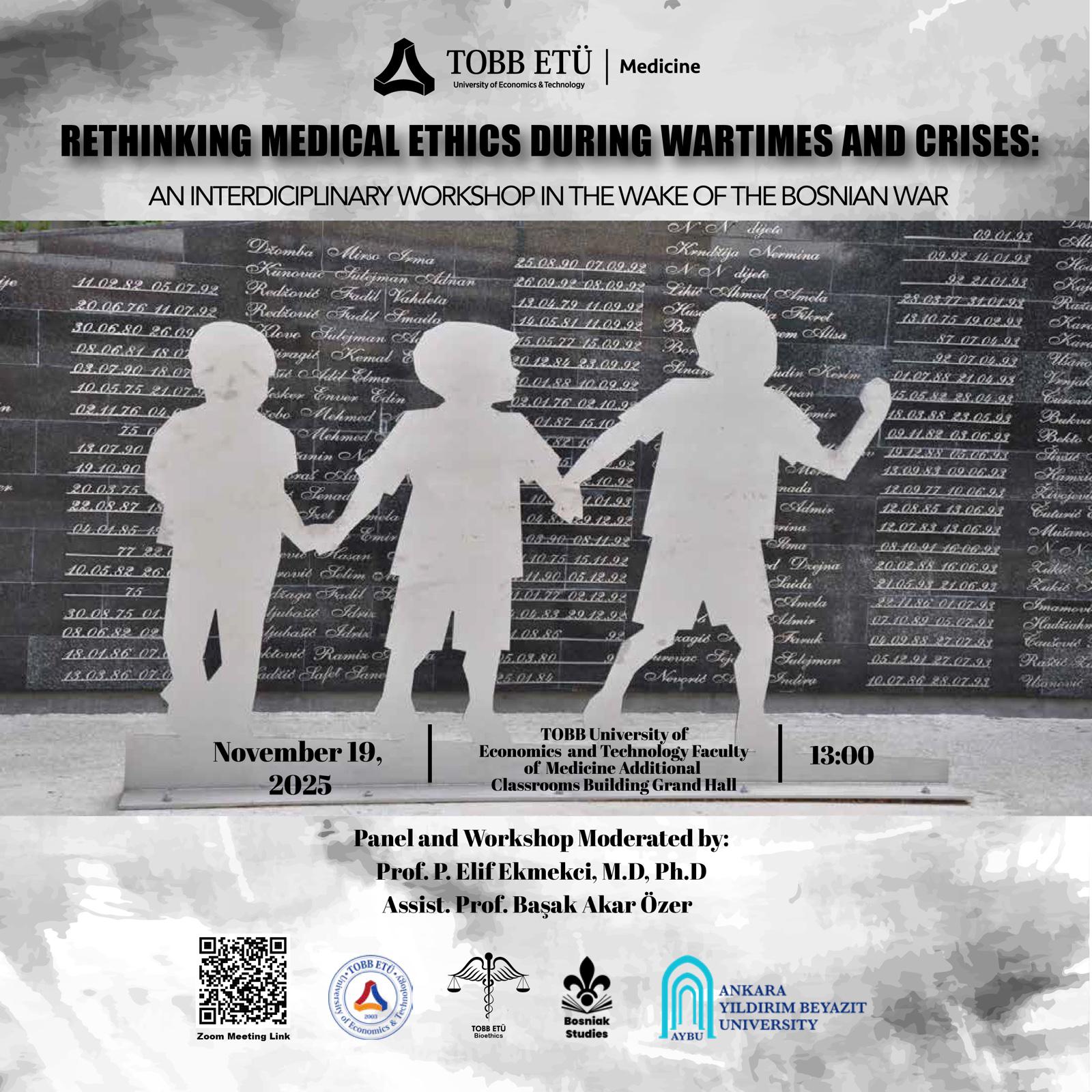
Workshop Poster

An Interdisciplinary Workshop in the Wake of the Bosnian War

This workshop brings together scholars, historians, and social scientists to explore the multifaceted impact of the Bosnian War, discussing historical perspectives, cultural consequences, and current academic research. The event aims to foster deeper understanding of the conflict's ongoing effects on communities, identity, and regional dynamics.

Focus Areas:

  • Historical analysis and documentation
  • Cultural and social consequences
  • Reconciliation and peace-building
  • Academic research and scholarship
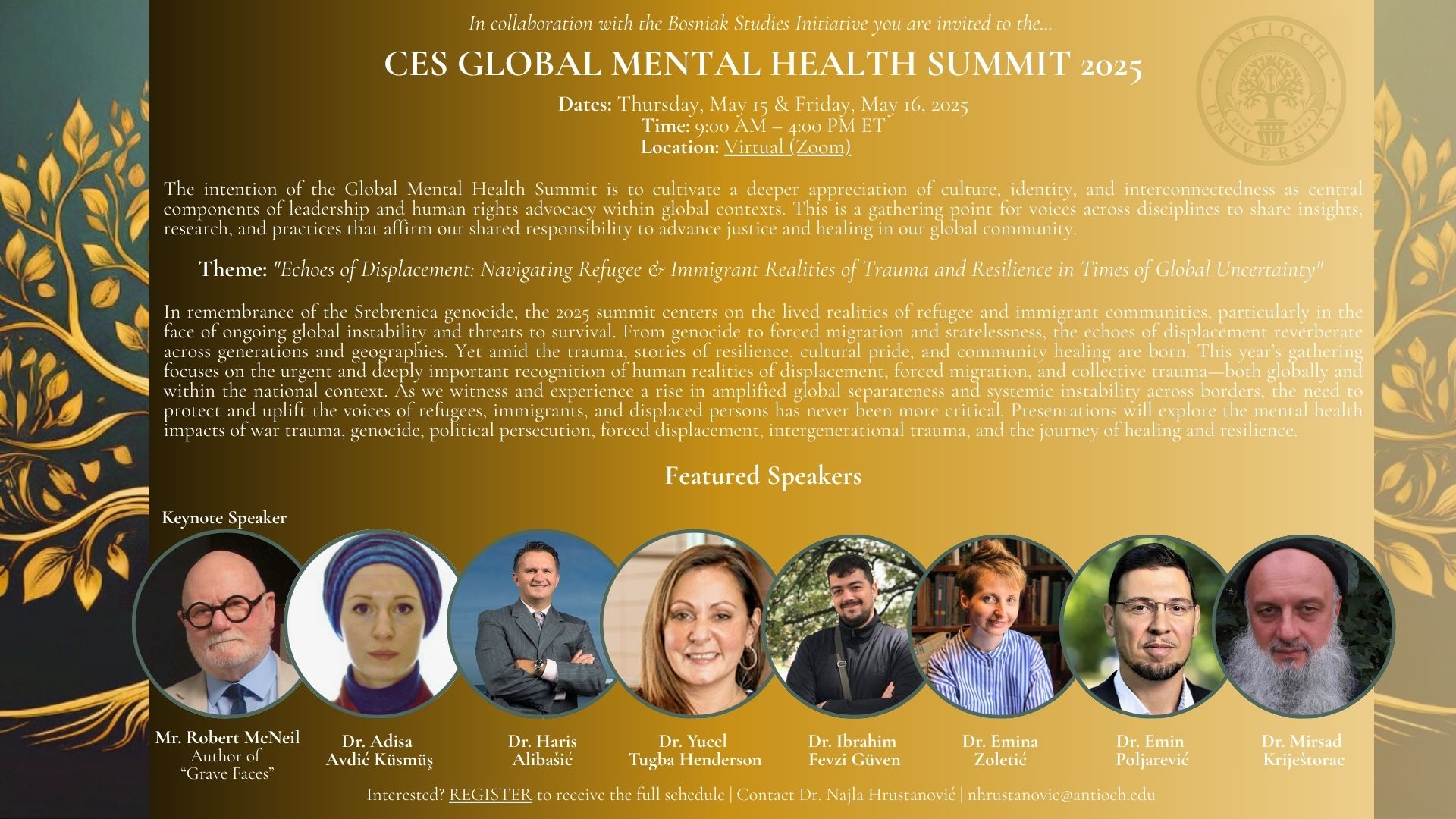
CES Summit Poster

CES Global Mental Health Summit 2025

The CES Global Mental Health Summit 2025 focuses on innovative research, policy developments, and international collaborations addressing mental health issues in diverse communities, including post-conflict populations. This summit brings together mental health professionals, researchers, and policymakers to discuss emerging trends and solutions.

Key Topics:

  • Mental health in post-conflict societies
  • Policy innovations and best practices
  • International research collaborations
  • Community mental health initiatives

Get Involved

Are you interested in participating in our events or organizing an activity? Contact us to learn more about upcoming opportunities.

Contact Us